
LinkedIn makes money through four main revenue streams: Premium Subscriptions, Talent Solutions, Marketing Solutions (advertising), and LinkedIn Learning. Each targetsa different type of user, from job seekers to recruiters to advertisers, which is precisely what makes the model so resilient.
With over 1 billion members across more than 200 countries, LinkedIn is the world's largest professional network. That scale isn't just impressive, it's the engine behind a business model that generates billions in revenue every year without charging most of its users a single cent. 👇
So how does LinkedIn make money if the core product is free? The answer lies in a classic freemium platform strategy: get as many professionals as possible onto the network for free, then monetize the companies and professionals who need more than the basics.
So do you wonder how this social network got to where it is and how LinkedIn makes money?
A brief history of LinkedIn
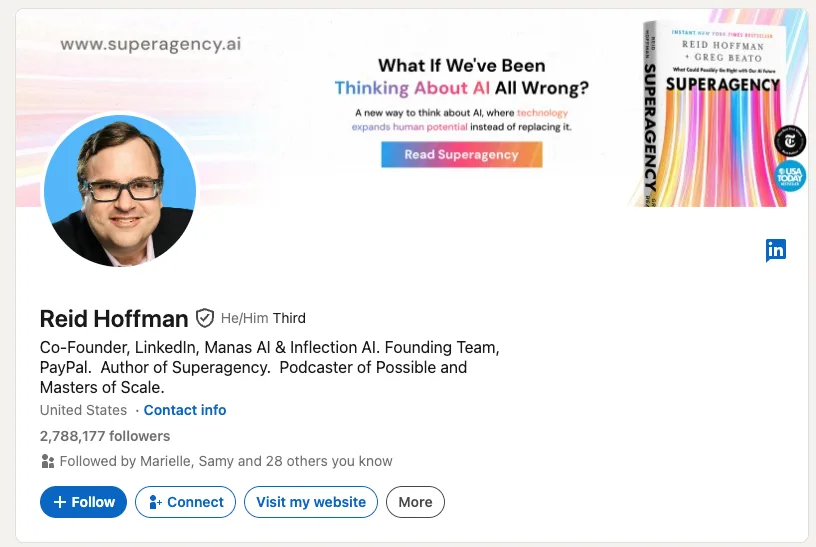
LinkedIn is a professional social network created in the heart of Silicon Valley by Reid Hoffman and Allen Blue in 2002. And yes, it's been 19 years already, and the network keeps on gaining notoriety and continues to be a success.

Hoffman obtained several degrees from Stanford University and Oxford. However, soon after, he turned to the Tech industry instead of working for the university (he was first known via PayPal, as a co-founder 😲). During this period, he started recruiting former colleagues to start the LinkedIn project, Allen Blue was the first person to join the team.
LinkedIn by the Numbers :
Head quarter 🏡 - On June 13, 2016, Microsoft announced the acquisition of the social network for an amount of $26 billion.
Current CEO 🤴 - Jeff Weiner, since 2009 (former vice president of Yahoo!)
Creation date 📆 - 2002.
Number of employees (Nov 2020) 🤸♂️ - 11,800 full-time employees in the world. (including those who work-from-home)
Members (2021) 🚀 - 546 million users.
Revenue (2020) ⚡ - $8,050 billion.
If your goal is to make money online, create a profitable business and get-rich, Reid Hoffman is definitely an excellent example and inspiration. 😎
What does LinkedIn offer?
LinkedIn is a social network allowing professionals to converse. In addition to being able to create and develop their network, professionals can sell their solutions, offer jobs, improve their brand image and their notoriety. LinkedIn therefore acts as a facilitator of exchange and interactions between supply and demand.
For companies, LinkedIn is a gold mine: a massive professional database that doubles as a prospecting list, a talent pool, and an advertising channel. 94% of B2B marketers use LinkedIn to distribute content, and the platform consistently ranks as the top source for B2B leads. That reach is exactly what LinkedIn sells. 🎯
According to Hootsuite, the network has 260 million monthly active users. And how is this significant ? Well, that's 260 million reasons to launch a digital strategy on LinkedIn.
LinkedIn's business model: why free works
Reid Hoffman's insight was simple and smart: build a free professional network that professionals actually want to use, then charge the people who want to reach those professionals. The more members join, the more valuable the network becomes, and the more LinkedIn can charge recruiters, advertisers, and sales teams for access.
Selling paid options to professionals with a business context is structurally easier than selling to consumers: the ROI is measurable, the budget often comes from the company, and the pain (finding talent, closing deals, reaching decision-makers) is concrete.
The goal of the network is, like all social networks for that matter, to make users consume information so that they remain connected and engaged. To do so, LinkedIn adopts the same functionality as Facebook, later followed by Instagram and Twitter. In order to accomplish this, among other things, they created an endless news feed, offering increasingly relevant content by adapting it to the user’s habits and preferences.
Understanding how the algorithm decides what to show users also matters a lot for anyone using LinkedIn engagement as part of their content or prospecting strategy.
LinkedIn's model works as a two-sided marketplace: on one side, professionals and companies building their presence; on the other, recruiters, advertisers, and sales teams willing to pay for access to that audience. The matchmaking only works if both sides trust the platform, which is why LinkedIn invests heavily in content relevance and targeting precision. 😉
Revenue stream | Who pays | What they pay for |
|---|---|---|
Premium Subscriptions | Individual professionals | Advanced search, InMail, profile insights and learning |
Talent Solutions | Companies and recruiters | Job posts, LinkedIn Recruiter and employer branding |
Marketing Solutions | Advertisers | Targeted LinkedIn Ads across several formats |
LinkedIn Learning | Individuals and companies | Online courses and skill tracking |
Premium Subscriptions: LinkedIn's direct revenue from users
Premium subscriptions are the most visible way LinkedIn makes money directly from individual users. They cater to four distinct audiences, each with a specific problem to solve.
There are four LinkedIn Premium tiers, targeting users from freelancers to large enterprises:
LinkedIn Recruiter Lite: designed for hiring managers and recruiters. Gives access to advanced search filters, unlimited messaging to candidates, and a pipeline management tool built into LinkedIn. The go-to for teams sourcing candidates at volume.
LinkedIn Business: targeted at professionals who want to grow their network faster. Includes additional InMail credits, advanced search for leads, and company growth insights.
Sales Navigator: built for sales teams and SDRs. Offers the most advanced prospecting filters on LinkedIn, real-time updates on accounts, CRM integration, and TeamLink for warm introductions. This is LinkedIn's most complete tool for LinkedIn Sales Navigator users.
LinkedIn Premium Career: aimed at job seekers. Unlocks who viewed your profile, InMail access to recruiters, and insights on how you compare to other applicants.

If you other paying offers from Linkedin, I highly recommend to read about Linkedin learning, which is an educational platform offering a wide selection of tutorial videos and distance learning courses
In 2020, a total of 39% of LinkedIn users were paying for LinkedIn Premium according to Kinsta. I don't know if you realize but that percentage is huge !
By matching supply and demand with purpose-built tools, LinkedIn turns its user database into a recurring revenue engine. Each premium tier serves a specific job-to-be-done, which keeps churn low and lifetime value high.
Talent Solutions: LinkedIn's biggest revenue driver
If Premium Subscriptions are LinkedIn's most visible revenue stream, Talent Solutions is its largest one. This segment covers every tool LinkedIn sells to companies that are hiring: job postings, recruiter tools, employer branding, and data-driven hiring insights.
The core products in this segment include:
LinkedIn Recruiter: a full recruiting platform with advanced search, candidate pipeline management, and team collaboration. See finding candidates on LinkedIn for how recruiters actually use these tools in practice.
LinkedIn Jobs: paid job postings that surface openings to qualified candidates based on skills, location, and career trajectory.
LinkedIn Talent Insights: a data analytics product that gives HR teams real-time market intelligence on talent availability, competitor hiring patterns, and workforce trends.
Career Pages: employer branding pages that let companies showcase their culture, team, and open roles to attract passive candidates.
The reason Talent Solutions dominates LinkedIn's revenue mix is structural: companies need to hire constantly, and LinkedIn is the only platform that combines a professional profile database with built-in recruiting tools at scale. Competitors like Indeed or Glassdoor compete on job listings, but none match LinkedIn's depth of professional data. For more on the official offer, see LinkedIn's official Talent Solutions suite documentation.
Marketing Solutions: how LinkedIn makes money from advertising
LinkedIn's advertising platform, known as Marketing Solutions, is what makes LinkedIn one of the most valuable B2B advertising channels in the world. Advertisers pay to reach LinkedIn's professional audience with a targeting precision you don't get anywhere else: by job title, seniority, industry, company size, skills, and even specific companies. 😮
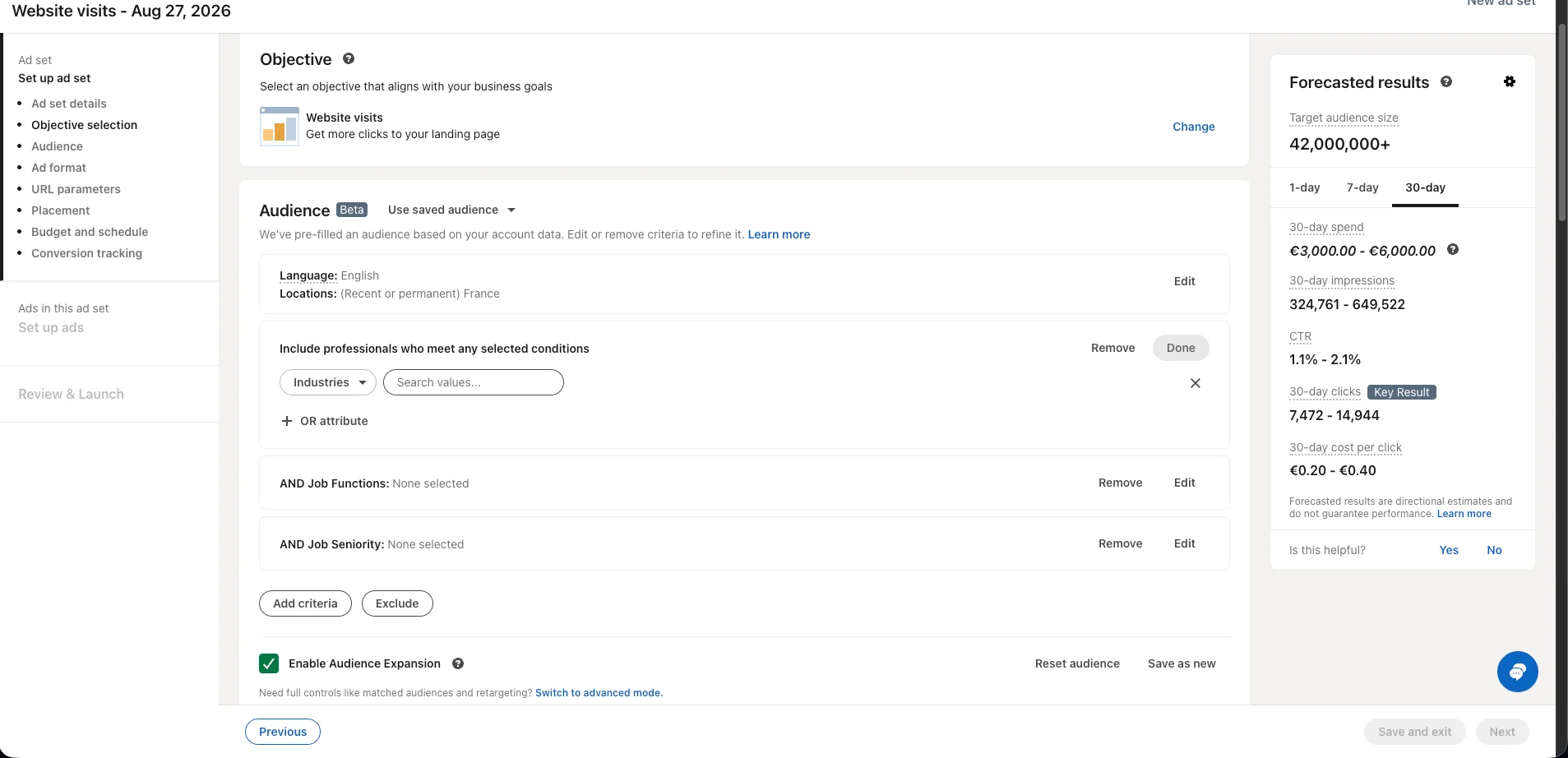
LinkedIn Ads come in several formats, each monetizing a different moment in the user experience:
Sponsored Content: paid posts that appear in the LinkedIn feed, blending with organic content. The most widely used format.
Message Ads and Conversation Ads: messages sent directly to users' LinkedIn inboxes. More personal than feed ads, and typically used for event invitations, product demos, or gated content offers.
Text Ads: small display ads shown in the sidebar and top banner. Lower cost-per-click, but also lower engagement. Good for brand awareness at scale.
Lead Gen Forms: pre-filled forms that collect prospect data without sending users off LinkedIn. High-converting for B2B lead generation because there's no landing page friction.
Dynamic Ads: personalized ads that pull the viewer's name and profile photo into the creative automatically.
LinkedIn Ads is a very interesting tool to increase the number of unique visitors to an online store or to develop a company's visibility for example.
LinkedIn Ads pricing uses an auction-based model: you bid for ad placements based on your budget and a quality score, and LinkedIn balances the highest bid with the most relevant ad for each user. Competitive audiences (like senior decision-makers at large companies) drive higher CPMs, which is part of why LinkedIn ads can be significantly more expensive than Facebook or Google Ads, but also generate higher-quality leads for B2B. Our full guide on LinkedIn Ads covers the bidding strategy in detail.
By combining advertising and premium subscriptions, LinkedIn runs a model where it monetizes both sides of the marketplace. Revenue growth has been consistent year after year, a sign of structural demand rather than a one-time trend.
How does LinkedIn make money as part of Microsoft?
LinkedIn's scale and financial performance caught Microsoft's attention early. By 2013, LinkedIn's market capitalization had already exceeded $32 billion, making it one of the most valuable social platforms in the world at the time.
LinkedIn's market cap had exceeded $32 billion by 2013, reflecting the market's confidence in its monetization model.
In 2016, Microsoft acquired LinkedIn for $26.2 billion, the largest acquisition in Microsoft's history at the time. The announcement sent LinkedIn's stock up by more than 47% in a single day. For more on what this ownership means for the platform, see our article on who owns LinkedIn.
Since 2016, LinkedIn operates as a Microsoft subsidiary and is no longer independently listed on the stock market. Under Microsoft's ownership, LinkedIn has continued to grow its revenue through the same four pillars, while benefiting from Microsoft's enterprise relationships and technology infrastructure. The acquisition effectively gave LinkedIn access to a sales channel it couldn't have built alone.
How Does LinkedIn Make Money? The Bottom Line
So, how does LinkedIn make money? Through a win-win, freemium model. The network stays free for most users and acts as a facilitator between supply and demand, then earns from those who need more: Premium Subscriptions, Talent Solutions, Marketing Solutions and LinkedIn Learning. It is the leader in B2B networks, and its revenue keeps growing year after year under Microsoft's ownership.
FAQ: How does LinkedIn make money?
LinkedIn runs on a freemium model: the network stays free for the vast majority of members, which is exactly what keeps it growing and valuable. The revenue comes from the minority who need more than the basics, so LinkedIn monetises the professionals and companies with the highest intent. In practice, the money comes in through three main doors:
Premium Subscriptions: individual professionals paying for advanced search, InMail and profile insights.
Talent Solutions: companies paying to source, contact and hire candidates.
Marketing Solutions: advertisers paying to reach a precise professional audience.
Talent Solutions is LinkedIn's largest revenue stream by far. It bundles everything a company needs to recruit: LinkedIn Recruiter, paid job posts, employer branding and hiring analytics. The reason it dominates is structural, companies hire continuously and no other platform pairs a billion-profile database with built-in recruiting tools. That combination keeps demand steady and pricing high, which is why this segment out-earns both ads and subscriptions.
LinkedIn generates several billion dollars a year, and revenue has grown almost every year since the Microsoft acquisition in 2016. The mix is led by Talent Solutions, followed by Marketing Solutions and Premium Subscriptions. What matters more than the headline number is the trend: the growth is structural, driven by recurring B2B demand rather than a one-off spike. Each pillar reinforces the others, which is what makes the model so resilient.
Yes, and advertising is one of LinkedIn's fastest-growing streams. Through Marketing Solutions, advertisers pay to reach the audience with a targeting precision you rarely find elsewhere: by job title, seniority, industry or even specific companies. Pricing runs on an auction, so the most competitive B2B audiences cost more per click but tend to convert far better. The main ad formats include:
Sponsored Content that blends into the feed.
Message Ads delivered straight to the inbox.
Lead Gen Forms that capture prospects without leaving LinkedIn.
Since Microsoft bought LinkedIn for $26.2 billion in 2016, LinkedIn has operated as a subsidiary and is no longer listed on the stock market. It keeps earning through the same four pillars, Premium, Talent Solutions, Marketing Solutions and LinkedIn Learning, but now with the reach of Microsoft's enterprise sales force and cloud infrastructure behind it. That backing is a big part of why revenue has kept climbing under Microsoft's ownership rather than plateauing.